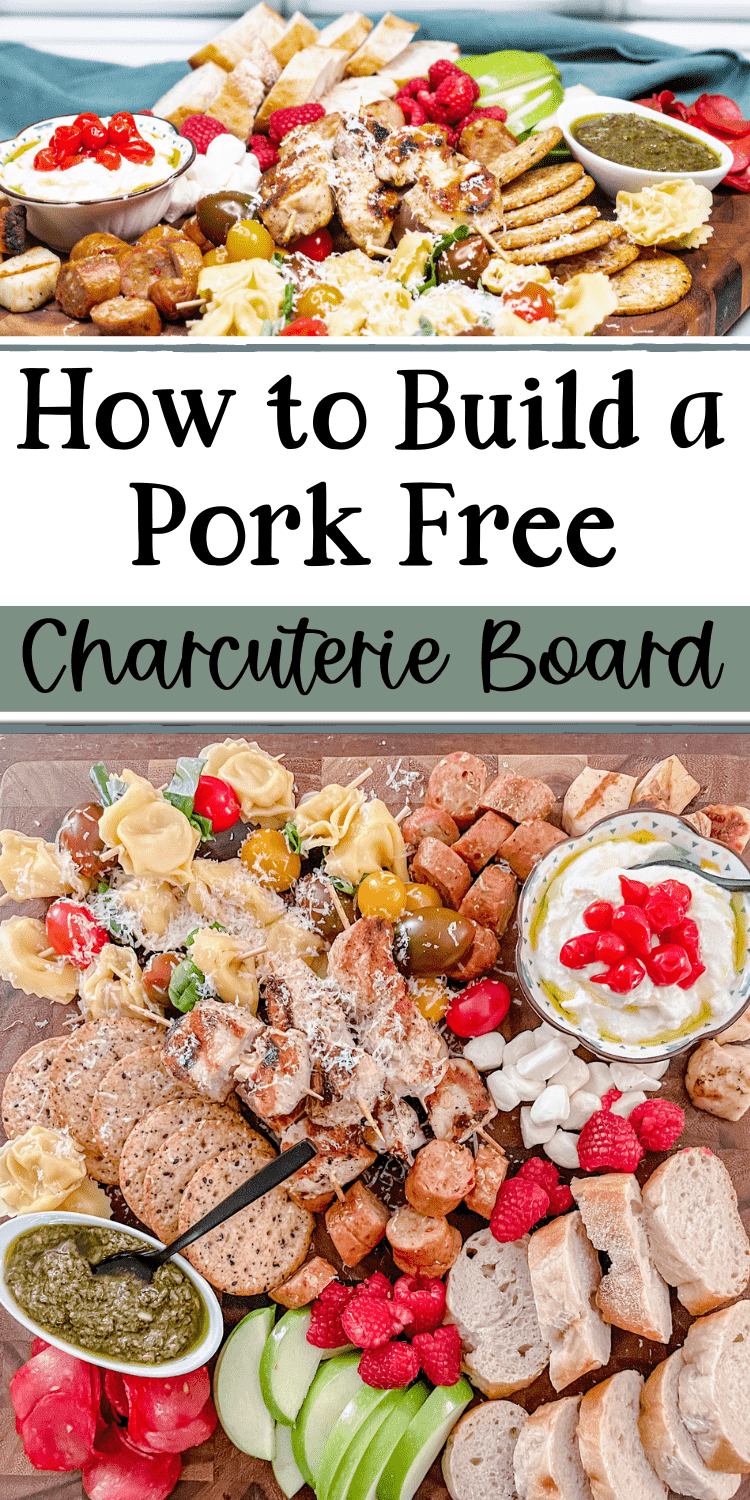
Pork Free Charcuterie Board: Everything You Need to Build a Great One

Everything you need to build a pork-free charcuterie board, including the best pork alternatives, cheese options, and easy recipes for mini chicken kabobs and whipped ricotta that make the board feel special.
Note: The links in this post may be affiliate links.
I put this board together for a gathering where a few guests do not eat pork. Most charcuterie boards lean heavily on prosciutto and pork salami, so I wanted to build something that felt just as complete without relying on either of those.
It ended up being one of my favorite boards I have made. The mini chicken kabobs and whipped ricotta were the pieces that made it feel a little more special than a typical spread, and everything on the board got finished by the end of the night.
This post walks through exactly what I put on that board, including instructions for the kabobs and the ricotta, plus a full list of pork free options for the meats, cheeses, fruit, and everything else so you can build it however works for your crowd.
What I Put on the Board
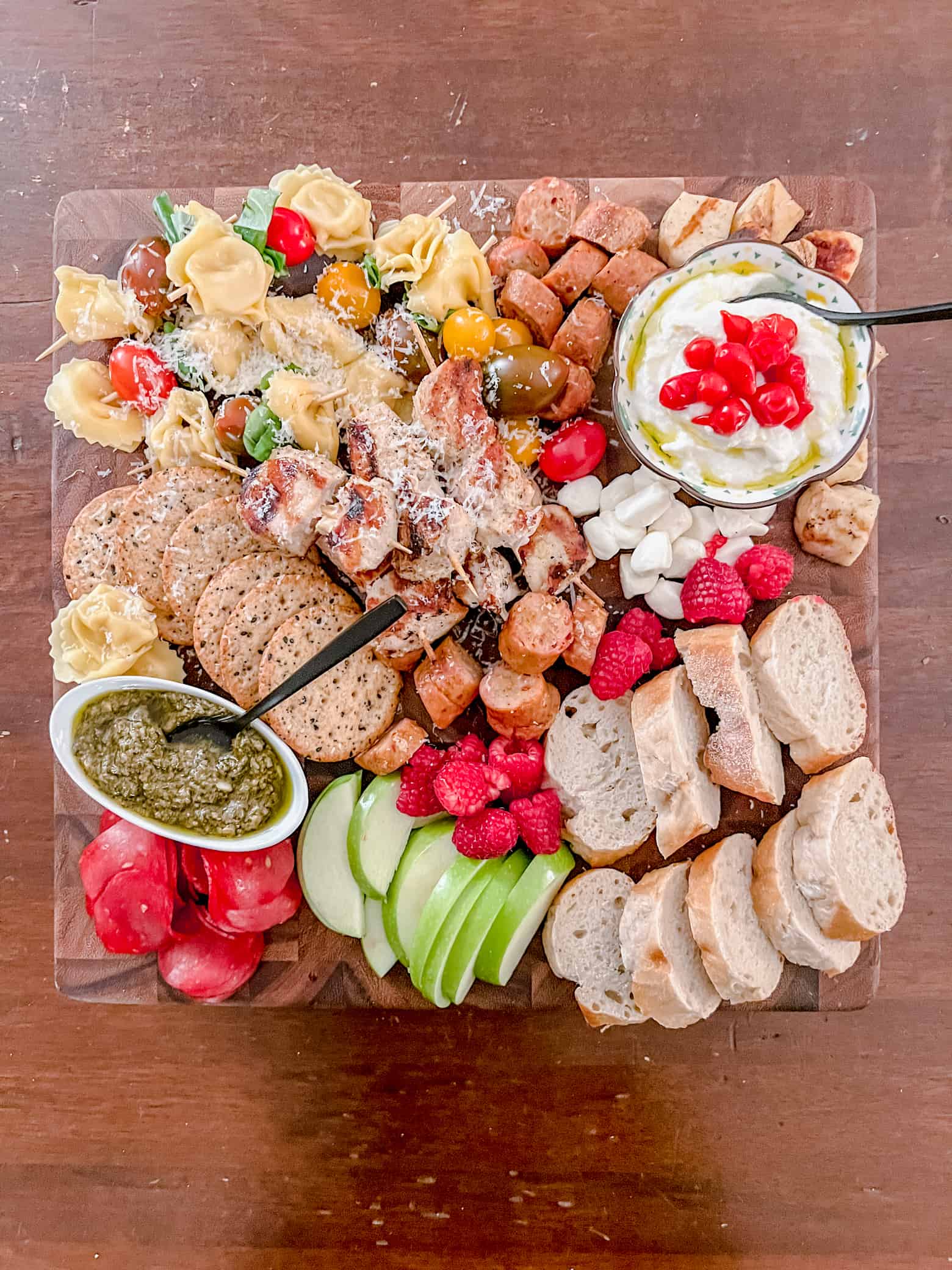
Here is the full breakdown of the board in the photos. A few items take a small amount of prep, but most are just a matter of slicing and arranging. The kabobs, halloumi, and ricotta are the three things worth making from scratch. Everything else is ready to go straight from the package.
Mini Chicken Kabobs
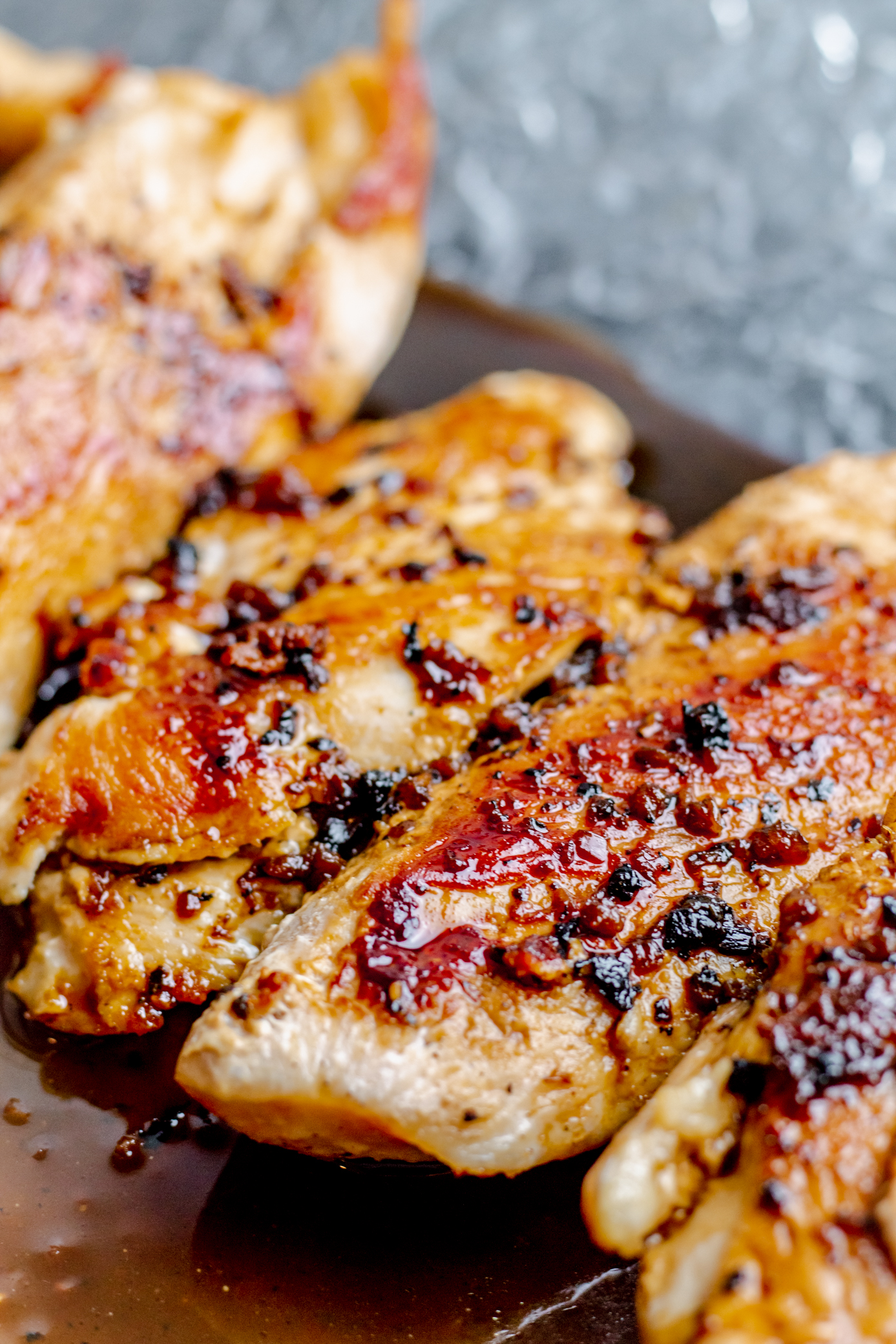
These are worth making. They take about 15 minutes start to finish and they stand out on the board in a way that packaged deli meat does not.
- Cut boneless chicken breast into 1-inch cubes and thread three pieces onto mini wooden skewers. Season with salt and pepper on both sides.
- Cook in a grill pan or on an indoor electric grill over medium-high heat, turning once or twice, until the internal temperature reaches 165 degrees Fahrenheit. This takes about 8 to 10 minutes depending on the size of your pieces.
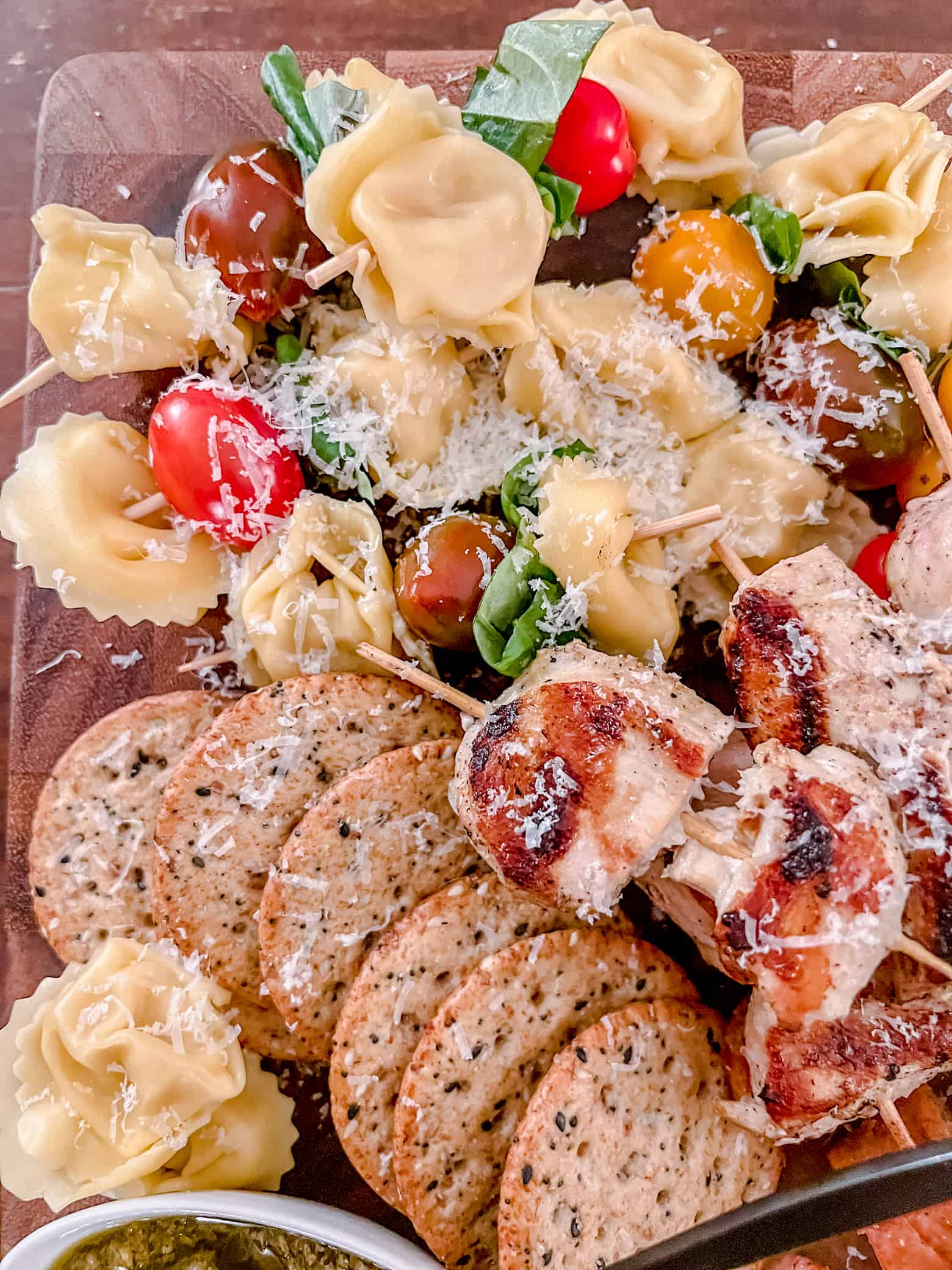
- While they are still hot, drizzle with a little good olive oil and finish with freshly grated Pecorino Romano. Add them to the board just before guests arrive so they are still warm. They go fast.
Whipped Ricotta
This is one of the easiest things you can make for a board and it looks really good. Put a cup or so of whole milk ricotta into a small food processor and blend until smooth and creamy, about 30 to 60 seconds. That is all there is to it.
Spoon it into a small bowl, drizzle generously with good olive oil, and top with a few mini peppadews if you have them. The peppadews add a little sweetness and color, but the ricotta is good without them too.
It works as a spread for the crackers and baguette slices, and it pairs really well alongside the chicken kabobs. People who have not had whipped ricotta before always ask about it.
You can make this a day ahead and store it covered in the refrigerator. Add the olive oil and peppadews right before you set the board out.
Grilled Halloumi
Halloumi is a semi-firm cheese that holds its shape when heated rather than melting, which makes it work well on a board. It gets a golden crust on the outside while staying soft in the middle.
Cut it into cubes and cook in the same grill pan you used for the chicken, with just a little olive oil, for a few minutes per side until golden. Add it to the board warm.
It is one of those things people reach for and then ask what it is. If you have never put warm cheese on a charcuterie board before, this is a good place to start.
Everything Else
- Sliced spicy Italian chicken sausage.
- Turkey pepperoni.
- Skewers of cheese tortellini, fresh basil leaves, and grape tomatoes. These can be assembled ahead of time and are easy to make in a big batch.
- Mini mozzarella pearls.
- Sliced baguette and an assortment of crackers.
- Sliced apples and fresh raspberries.
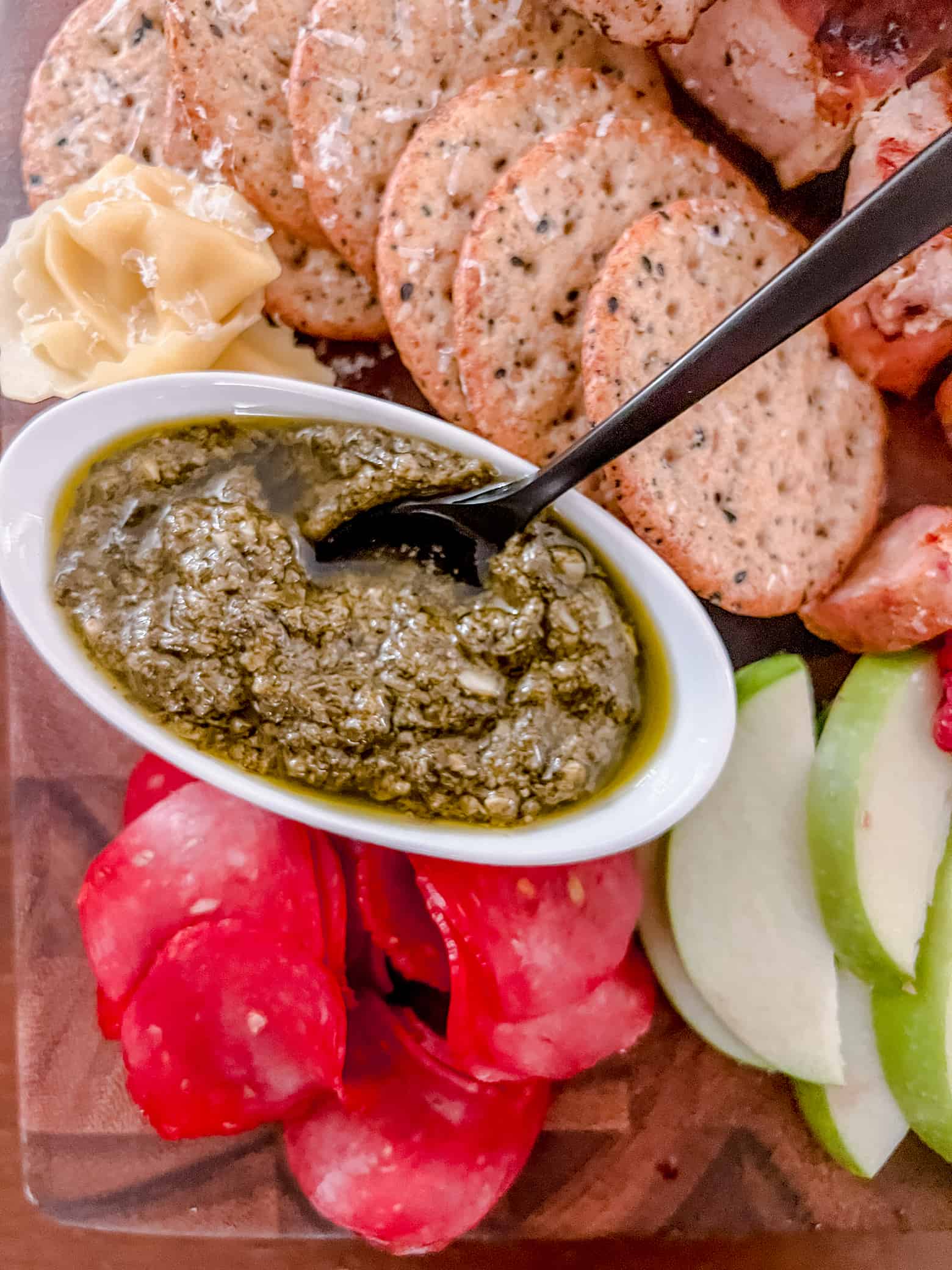
- A small bowl of pesto for dipping
More Pork Free Meat Options
If you want to build your own version or add more variety, here are more options that work well on a board. Most are easy to find at any grocery store.
- Turkey pepperoni
- Beef salami
- Sliced chicken breast
- Turkey bacon
- Thinly shaved deli meats such as roast beef, turkey breast, or corned beef
- Smoked salmon
- Shrimp
- Sliced beef kielbasa
- Chicken sausage
- Mini beef sausages
Cheese Options
A mix of soft and hard cheeses gives the board more variety in flavor and texture. Soft cheeses like brie and goat cheese are good for spreading, while harder ones like aged gouda and cheddar hold up better for slicing and snacking. Aim for at least two or three different types.
- Brie
- Aged gouda
- Cheddar
- Goat cheese
- Mozzarella
- Blue cheese
- Feta
Fruit and Vegetable Options
Fresh fruit and vegetables add color and keep the board from feeling too heavy. Grapes, berries, and sliced apples tend to disappear quickly, so it is worth putting out more than you think you need.
- Bell peppers
- Cucumbers
- Grape tomatoes
- Carrots
- Pickles
- Berries
- Grapes
- Sliced apples
Crackers and Bread
Having at least two options here is worth it. A sliced baguette and a mix of crackers cover most preferences and give people something neutral to build bites on.
- Sliced baguette
- Pita bread
- An assortment of crackers
Spreads and Condiments
Spreads are what tie a board together. A little honey, a good mustard, and something like pesto or jam give people a lot to work with and make even plain crackers interesting.
- Sea salt and black pepper for finishing
- Mustard
- Honey
- Chutney
- Pesto
- Jam
A Few Tips for Building the Board
Portion sizing is one of the harder parts of putting together a charcuterie board. It really depends on how many people you are feeding and whether the board is meant as a snack or the main thing you are serving.
My approach is to buy a little more than I think I need, prep everything in advance, and refill the board as it gets low rather than trying to fit everything on at once. It keeps the board looking good throughout the evening and takes the pressure off getting the arrangement perfect from the start.
For timing: the whipped ricotta can be made a day ahead and stored covered in the refrigerator. Add the olive oil and peppadews right before setting out the board. The kabobs and halloumi are best cooked right before guests arrive and added to the board while they are still warm.
For the kabobs, a small indoor electric grill works really well if you do not want to deal with a full grill pan. Either way, make sure the chicken reaches 165 degrees Fahrenheit before it goes on the board.
You Might Also Like These Boards
- How to Build a Smoked Salmon Charcuterie Board
- Italian Grazing Board with Air-Fryer Roasted Tomatoes
- Everything Bagel Veggie Tray
Final Thoughts
A pork free charcuterie board does not require a lot of compromises. The same principles apply as any other board: a mix of textures, a few different proteins and cheeses, something fresh, and something to spread or dip.
The mini chicken kabobs and whipped ricotta are the two things I would not leave off. They take a little more effort than opening a package of deli meat, but they are what made this board feel like something worth putting together. Once you make them once they are easy to come back to.